하다 vs 되다
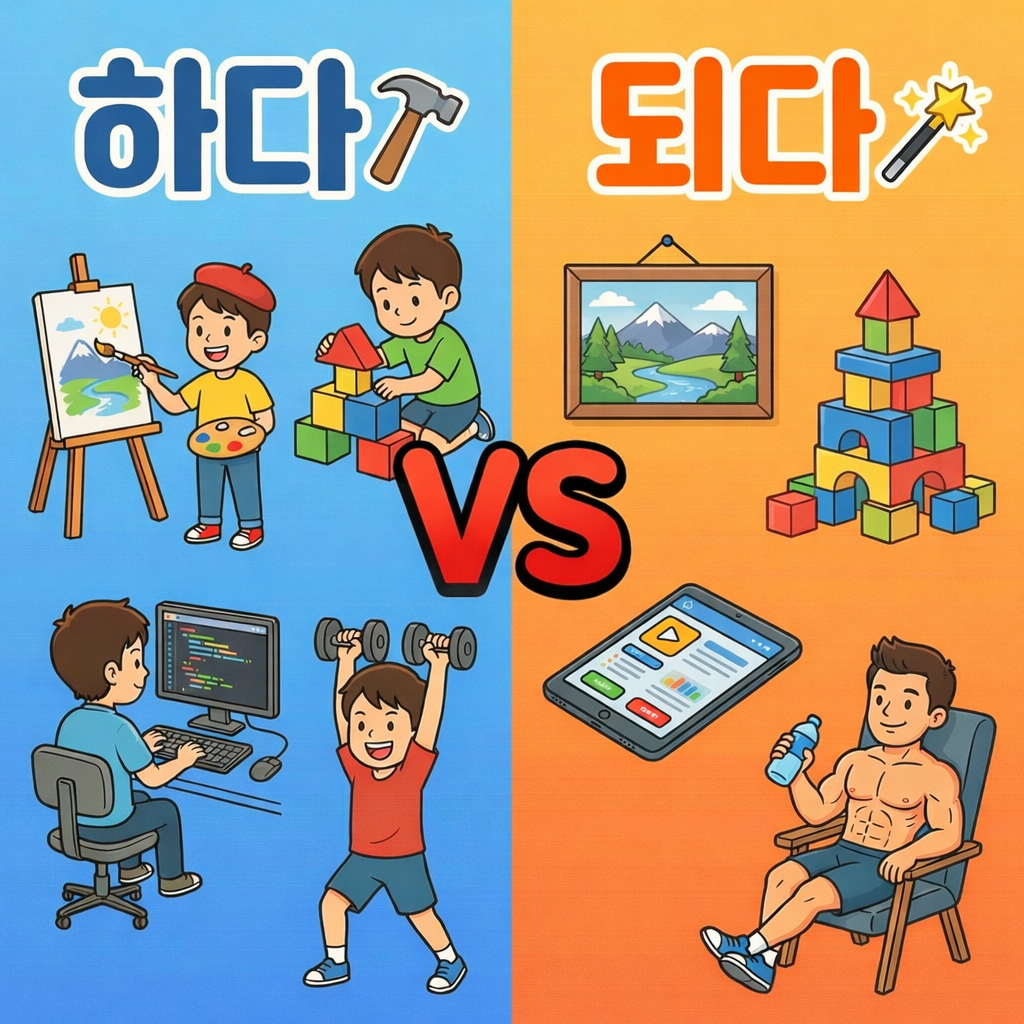
What are the differences between하다 and 되다?
하다 vs 되다 (with Sino-Korean nouns)
1. Core difference
하다 (active voice)
The subject intentionally performs the action.
Focus = who did it
되다 (passive / result-focused)
The subject is affected by the action or reaches a result/state.
Focus = what happened / the outcome, not the doer.
2. Meaning contrast in simple terms
하다
되다
“SUBJECT” acts
“AN EVENT” has acted
“SUBJECT” = The doer
“SUBJECT” = The event being acted
The nuance contains more will and control by the DOER
The nuance sounds more official, and neutral
3. Example pairs
① 청소하다 / 청소되다
호텔리어가 방을 청소했어요.
The hotelier cleaned the room. (“The HOTELIER” did it)
객실이 깨끗하게 청소되었어요.
The room has been cleaned. (We care about the result, not who cleaned it)
→ We can find many “되다” expressions from announcements in workplaces, hospitals, clinics, and hotels so on.
② 시작하다 / 시작되다
우리는 리허설을 3시에 시작했어요.
We started the rehearsal at 3.
리허설이 3시에 시작됐어요.
The rehearsal has started at 3.
✔ 하다 → 누가 시작했는지 중요 ; It slightly more focuses on WHO did the rehearsal.
✔ 되다 → 사건 자체가 중요 ; It slightly more focuses on the fact that the rehearsal was started.
③ 승인하다 / 승인되다
회사가 제 휴가를 승인했어요.
The company approved my leave.
제 휴가가 승인되었어요.
My leave was approved.
→ 승인되었습니다 / 접수되었습니다 / 처리되었습니다 so on are written in the official announcement, business emails, and the administration documents very frequently.
④ 결정하다 / 결정되다
우리는 공연 날짜를 결정했어요.
We decided the performance date.
; It slightly focused on the fact “WE” decided the date more.
공연 날짜가 결정되었어요.
The performance date has been decided.
; It slightly focused on the fact “The date was decided.” more.
⑤ 변경하다 / 변경되다
고객이 예약 시간을 변경했어요.
The client changed the reservation time.
; It slightly focused on the fact “THE CLIENT” changed time more.
예약 시간이 변경되었습니다.
The reservation time has been changed.
; It slightly focused on the fact “Reservation time was changed.” more.
4. Important nuance: “되다 = 더 부드럽고 객관적”
In Korean, the word "되다" is used often to blur the responsibility of the subject or make it sound official.
한국어에서는 주체 대상의 책임을 흐리게 하거나, 공식적으로 들리게 하기 위해 “되다.” 를 많이 씁니다.
Example sentences:
그 C.E.O.는 정책을 철회했습니다.
The C.E.O. has withdrawn the policy.
( It sounds direct and focuses on the action’s SUBJECT. )
정책이 철회됐습니다.
The policy has been withdrawn.
( It sounds official and neutral. )
5. Native-like contrast example
선생님이 시험을 취소했어요.
The teacher canceled the exam. (slightly focuses on the fact that the TEACHER canceled.)
시험이 취소됐어요.
The exam was canceled. (neutral, no asking who did.)
6. very common 하다/되다 pairs
하다
되다
준비하다 to prepare
준비되다 to be prepared
완료하다 to complete
완료되다 to be completed
접수하다 to register
접수되다 to be registered
발송하다 to send
발송되다 to be sent
예약하다 to reserve
예약되다 to be reserved
공지하다 to announce
공지되다 to be announced
설치하다 to install
설치되다 to be installed
개발하다 to develop
개발되다 to be developed
Example sentences: :
앱이 아직 설치되지 않았어요.
The app hasn’t been installed yet.
매니저가 앱을 아직 설치하지 않았어요.
The manager hasn’t installed the app, yet.
