Adnominal endings in Korean
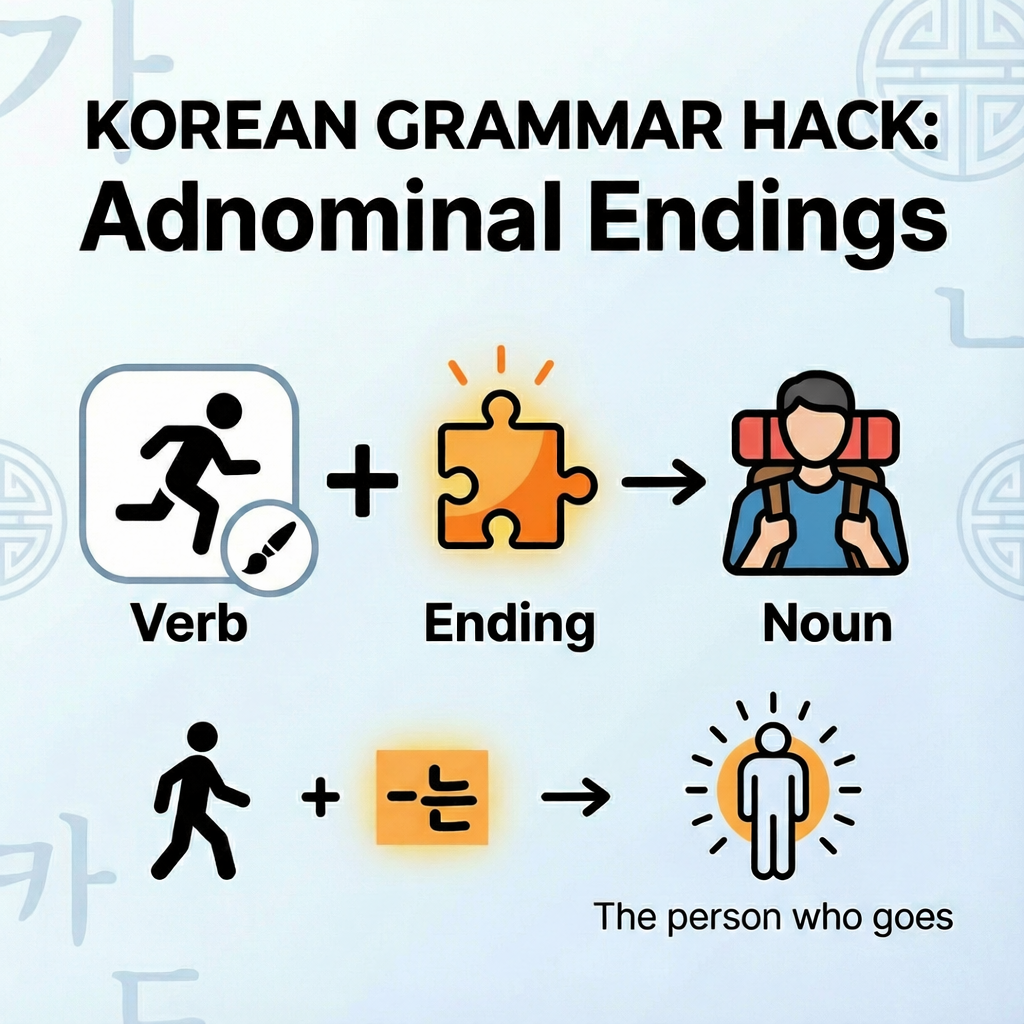
How to modify NOUN with ADJECTIVE & VERB using Adnominal endings in Korean?
Korean Adnominal Endings (관형사형 어미)
-(으)ㄴ, -는, -던, -(으)ㄹ
(How verbs & adjectives modify nouns by tense)
1️⃣ What are adnominal endings?
In Korean, verbs and adjectives can directly modify nouns by changing their endings.
These endings show tense, aspect, and speaker perspective, similar to English relative clauses.
📌 English:
The book that I read
📌 Korean:
읽은 책
(No “that / which / who” — tense is shown by the ending “은” here.)
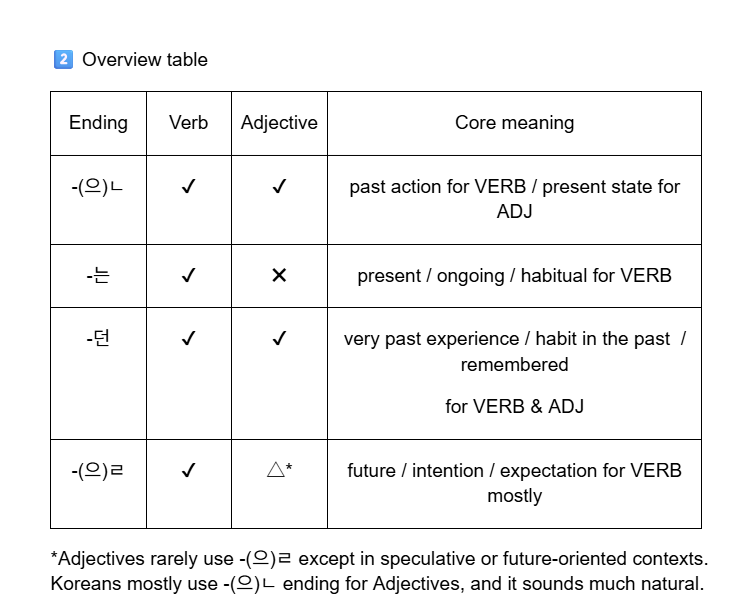
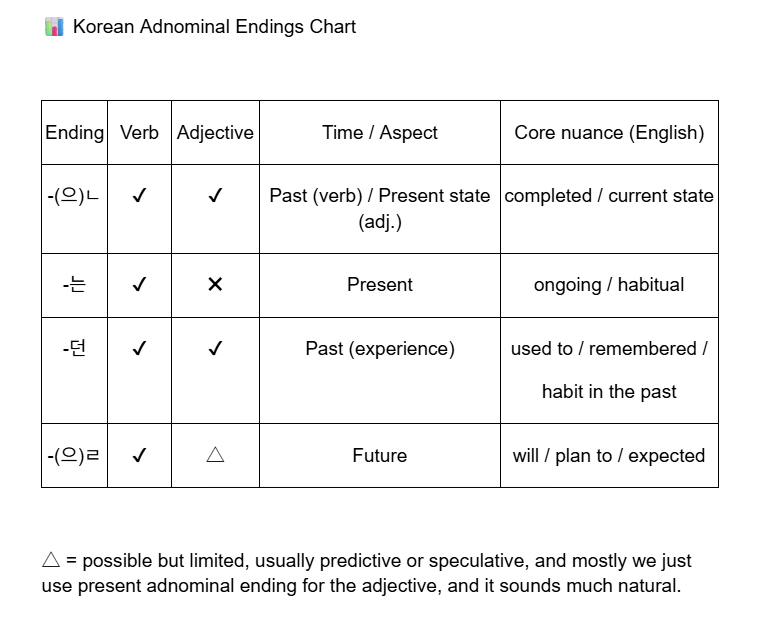
Adjectives rarely use -(으)ㄹ except in speculative or future-oriented contexts. Koreans mostly use -(으)ㄴ ending for Adjectives, and it sounds much natural.
3️⃣ -(으)ㄴ : past (verbs) / present state (adjectives)
🔹 With verbs: completed past action
Use -(으)ㄴ when the action is finished.
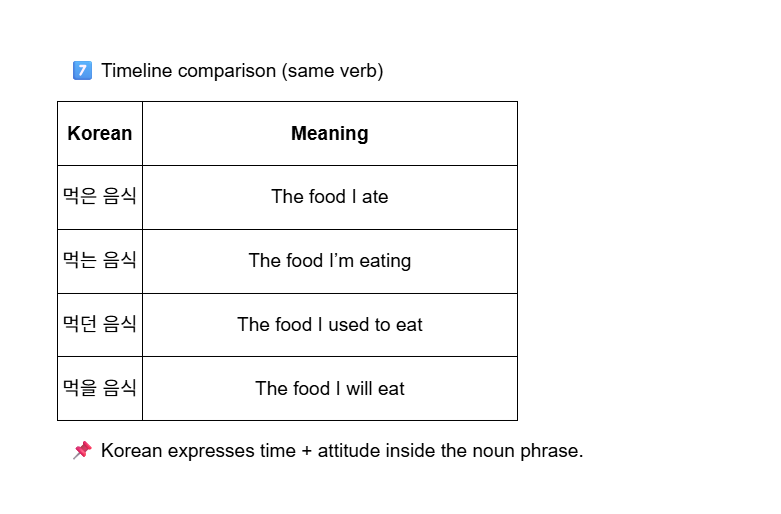
그 남자가 입은 바지
→ The pants the guy wore
하와이에서 산 가방
→ The bag I bought in Hawaii
처음 만난 사람
→ The person I met for the first time
📌 This corresponds to English past tense relative clauses.
🔹 With adjectives: current, fixed state
Adjectives describe a state, so -(으)ㄴ shows the present condition.
예쁜 꽃
→ A pretty flower
밝은 색
→ A bright color
조용한 거리
→ A quiet street
📌 Even though the ending looks “past,” it does NOT mean past for adjectives.
4️⃣ -는: present / ongoing / habitual (verbs only)
🔹 With verbs ONLY
Use -는 for actions that are:
happening now
habitual
generally true
지금 읽는 책
→ The book I’m reading now
매일 가는 카페
→ The cafe I go to every day
요즘 배우는 운동
→ The sport I’m learning these days
★ Adjectives do NOT use -는
❌ 예쁘는 사람
⭕ 예쁜 사람
5️⃣ -던 : past experience, memory, or incomplete action
🔹 Key idea (important!)
-던 refers to:
something experienced in the past
often not completed
often recalled from memory
It frequently adds nostalgia, contrast, or background feeling.
🔹 With verbs: past, ongoing, or habitual in the past
어릴 때 자주 가던 공원
→ The park I used to go to often when I was little
내가 살던 집
→ The house I used to live in
늘 먹던 음식
→ The food I used to eat
📌 English equivalents:
used to
would
that I remember
habitually
🔹 With adjectives: remembered past state
20년 전에 인기가 많던 아이돌 그룹
→ The idol group that had been popular 20 years ago
어렸을 때 유행하던 물건
→ The item that had been trendy when I was little
항상 조용하던 학생
→ The student that had been quiet always
📌 Often implies:
“It was like that then (but maybe not now).”
6️⃣ -(으)ㄹ: future/intention/expectation (verbs mostly)
🔹 With verbs: future or planned action
Use -(으)ㄹ for actions that have not happened yet.
다음 주에 볼 시험
→ The exam I will take next week
곧 만날 사람
→ The person I will meet soon
내년에 할 프로젝트
→ The project I will do next year
📌 This includes:
future
intention
expectation
assumption
🔹 With adjectives (limited, speculative)
Adjectives can use -(으)ㄹ when the meaning is uncertain or expected.
5년 뒤에 더 비쌀 집
→ The house that will probably be more expensive 5years later
미래에 살기 가장 좋을 나라
→ The country that will be best to live in the future
📌 This sounds predictive, not descriptive, and in a real conversation we use present adnominal ending for the adjective mostly, and it sounds much natural.
8️⃣ Key learning tips for English speakers
Korean modifiers come before the noun
No relative pronouns
One ending = tense + nuance
-던 is about memory, habit, a state before it changed and experiences in the past, not just time
9️⃣ One-sentence summary
Korean adnominal endings compress tense, aspect, and speaker perspective into one verb ending before the noun.
8️⃣ Key learning tips for English speakers
Korean modifiers come before the noun
No relative pronouns
One ending = tense + nuance
-던 is about memory, habit, a state before it changed and experiences in the past, not just time
9️⃣ One-sentence summary
Korean adnominal endings compress tense, aspect, and speaker perspective into one verb ending before the noun.
