
What is the difference between “아니요” and “아니에요”?
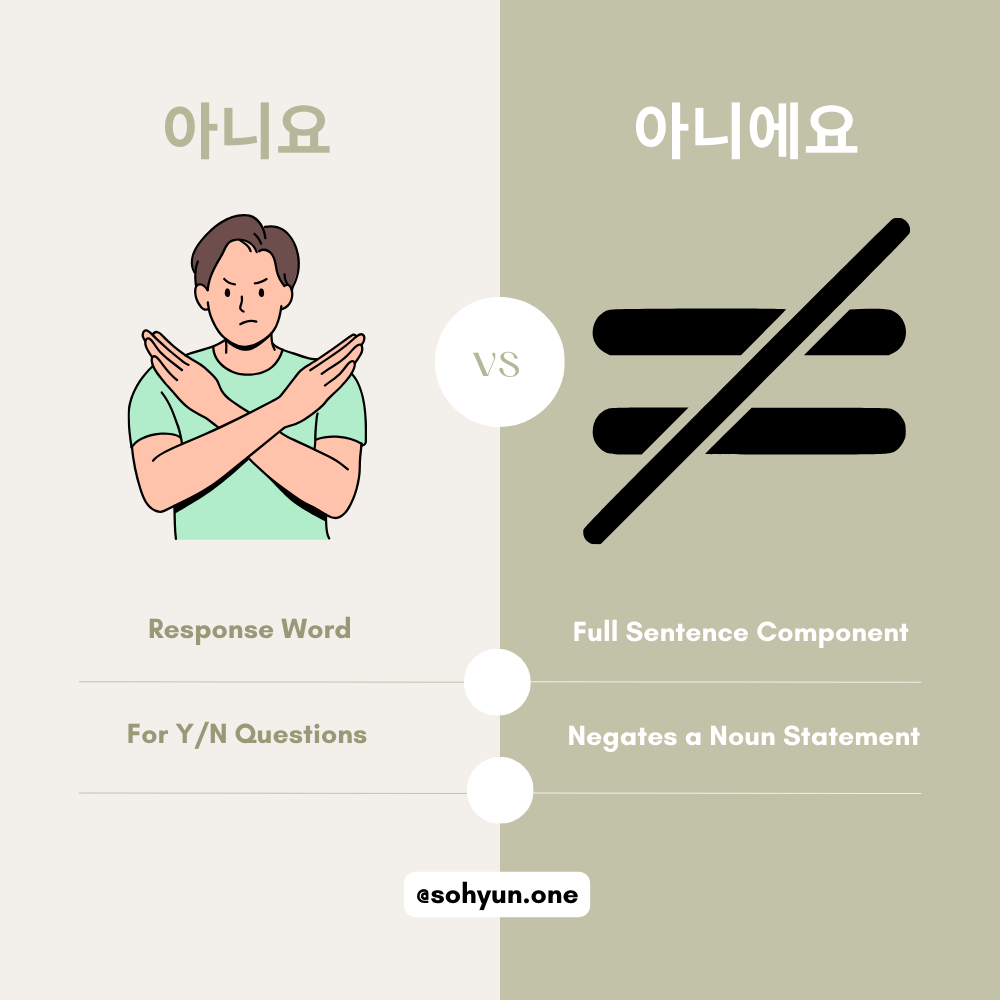
In Korean, “아니요” (aniyo) and “아니에요” (anieyo) both relate to negation, but they are used in different grammatical situations. Understanding the difference helps learners sound more natural in Korean. 😊
1️⃣ “아니요” — “No” (a response word)
아니요 is an interjection, meaning it is used by itself to answer a question.
It simply means “No.”
It does not form a full sentence.
It is commonly used when responding to yes/no questions.
Examples
A: Mel 씨는 한국 사람이에요?
B: 아니요. Mel 씨는 미국 사람이에요.
English
A: Is Mel a Korean?
B: No. Mel is an American.
A: 소현 씨, 지금 바빠요?
B: 아니요, 괜찮아요.
English
A: Sohyun, are you busy now?
B: No, It’s okay.
A: 정현 씨, 커피 좋아해요?
B: 아니요, 저는 차를 더 좋아해요.
English
A: Junghyun, Do you like coffee?
B: No, I prefer tea.
💡 Key point:
아니요 = “No” as a stand-alone answer.
2️⃣ “아니에요” — “is not / am not / are not” (a sentence)
아니에요 comes from the noun 아니다 (to not be).
It is used to negate a noun statement.
Structure:
Noun + 아니에요
= “is not / am not / are not”
Examples
1. 제 마카우 Sara는 수컷이 아니에요.
English : My macaw Sara is not male.
2. 김치는 중국 음식이 아니에요.
English : Kimchi is not a Chinese food.
3. Steve 씨는 제 남편이 아니에요.
English : Steve is not my husband.
4. Cortis의 James는 한국 사람이 아니에요.
English : James of Cortis is not a Korean.
💡 Key point:
아니에요 = “not to be”, used inside a full sentence.
3️⃣ A situation where both appear together
Sometimes 아니요 + 아니에요 appear together because they serve different roles.
Example:
A: Ben 씨는 학생이에요?
B: 아니요, Ben 씨는 학생이 아니에요.
English
A: Is Ben a student?
B: No, Ben is not a student.
Breakdown:
아니요 → answering the question (“No”)
아니에요 → making the negative statement (“not a student”)
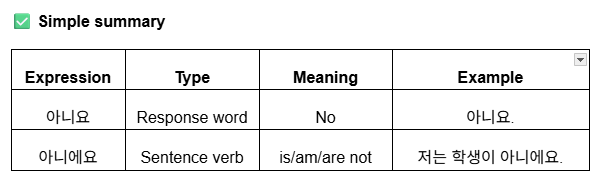
✔️ Quick learner tip
Think of it like this:
아니요 = No
아니에요 = not to be
